Stereoscopic Camera
An investigation in digital stereoscopic photography.
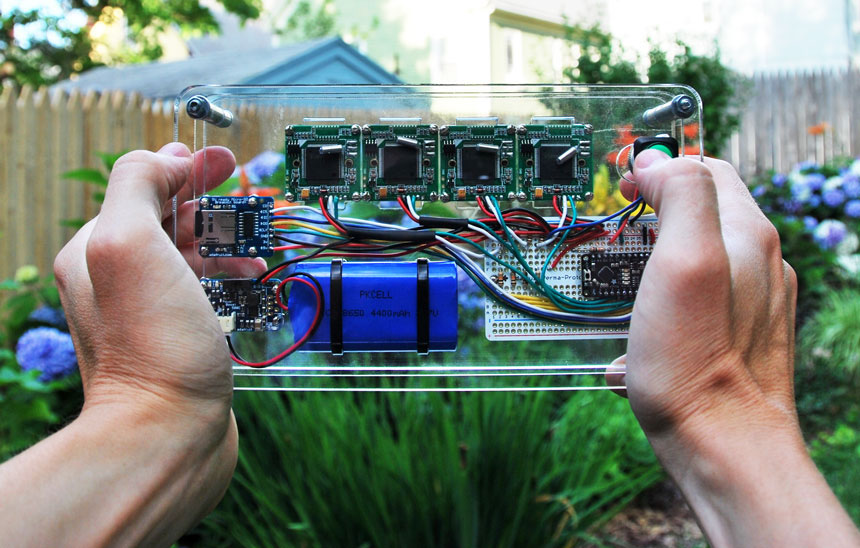
The Premise
We see in stereo. Two eyes, two slightly offset images, a brain that fuses them into something rich with depth and texture. Cameras can see the same way — they just need more lenses.
This camera has four. They fire simultaneously when the shutter is pressed, capturing four images of the same moment from four slightly different vantage points. On paper, those frames could be combined with lenticular printing. On the web, an animated GIF gets you something similar — a flickering, parallax-rich view of an ordinary scene.
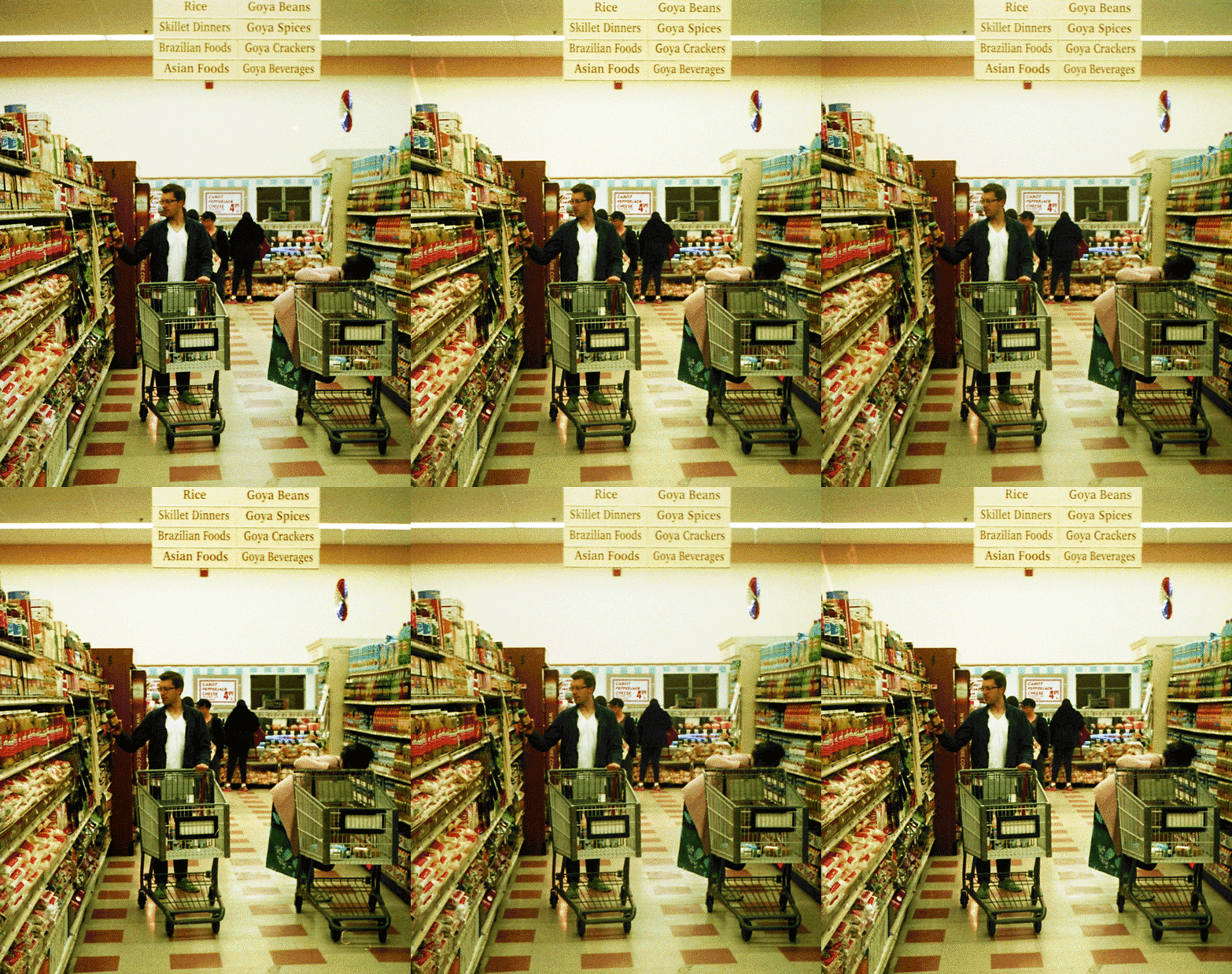
A four-frame capture in a supermarket shows the camera’s 3D effect.
How It’s Built
The prototype is four cameras wired to an Arduino microcontroller, writing to an SD card on shutter release. The enclosure is a three-layer acrylic sandwich, laser-cut: front plate with four lens holes, middle plate to seat the electronics, back plate exposing the shutter button and battery.
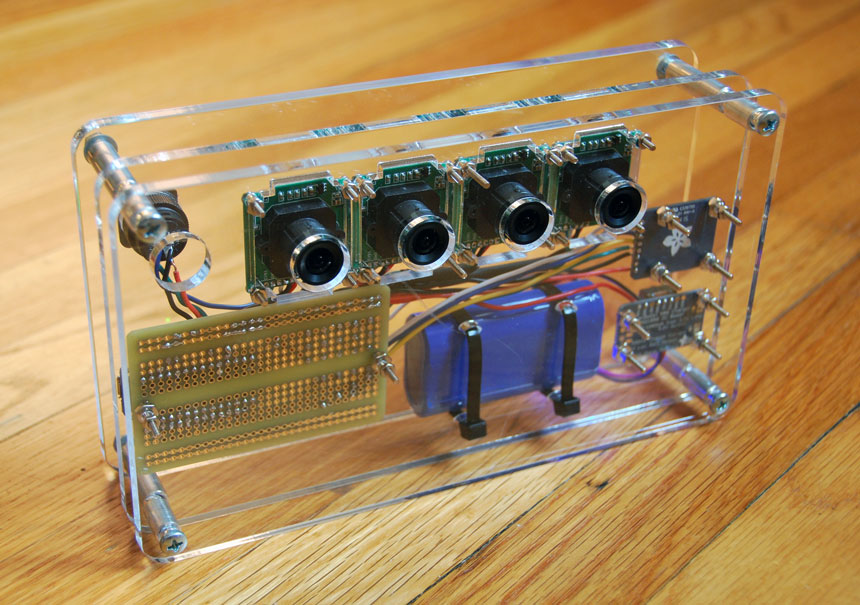
Front plate. Four holes line up with the camera modules behind it.
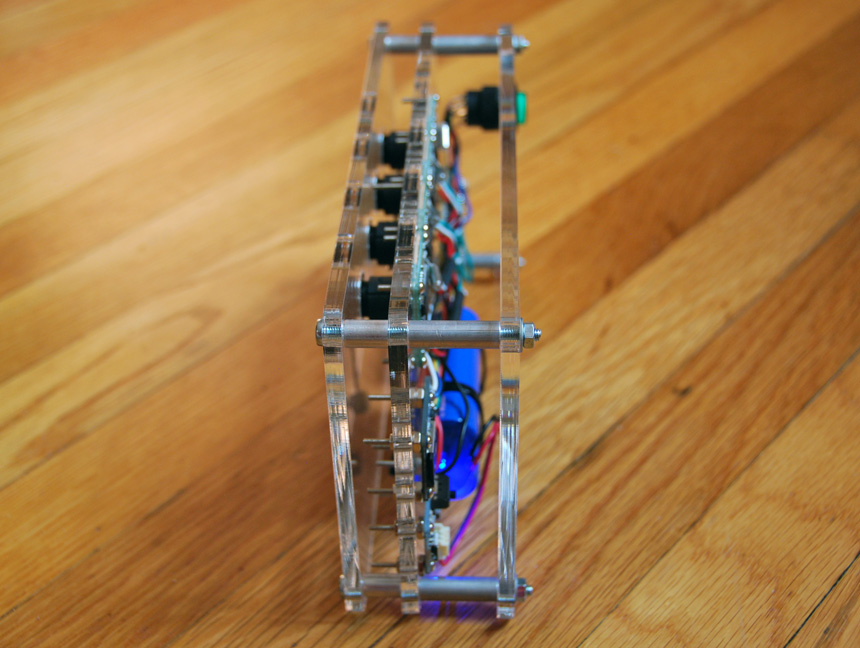
Side view of the acrylic and electronics sandwich.
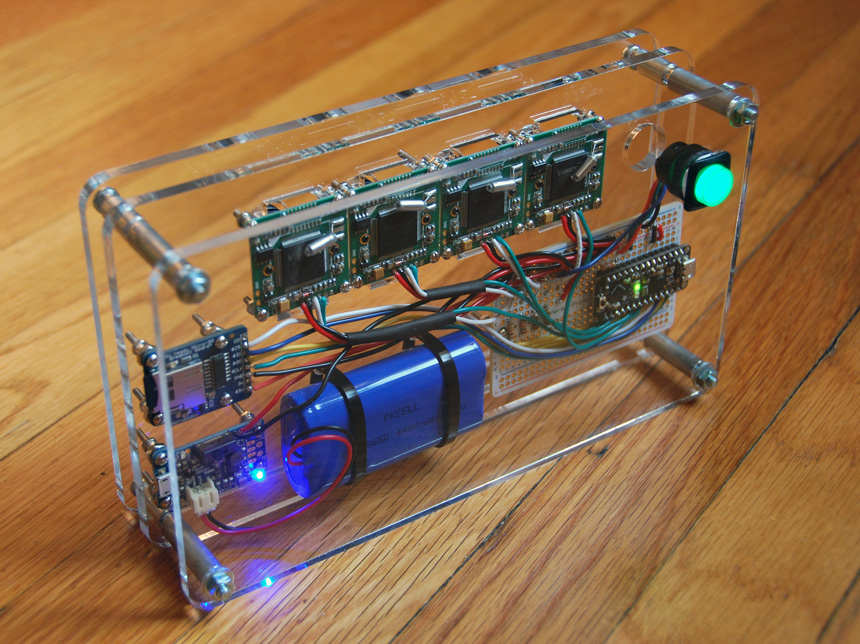
Back plate. Circuit, battery, and shutter release exposed.
Build Your Own
The Arduino source is on GitHub under a dual MIT/GPL license, along with the laser-cutting templates for the acrylic plates.
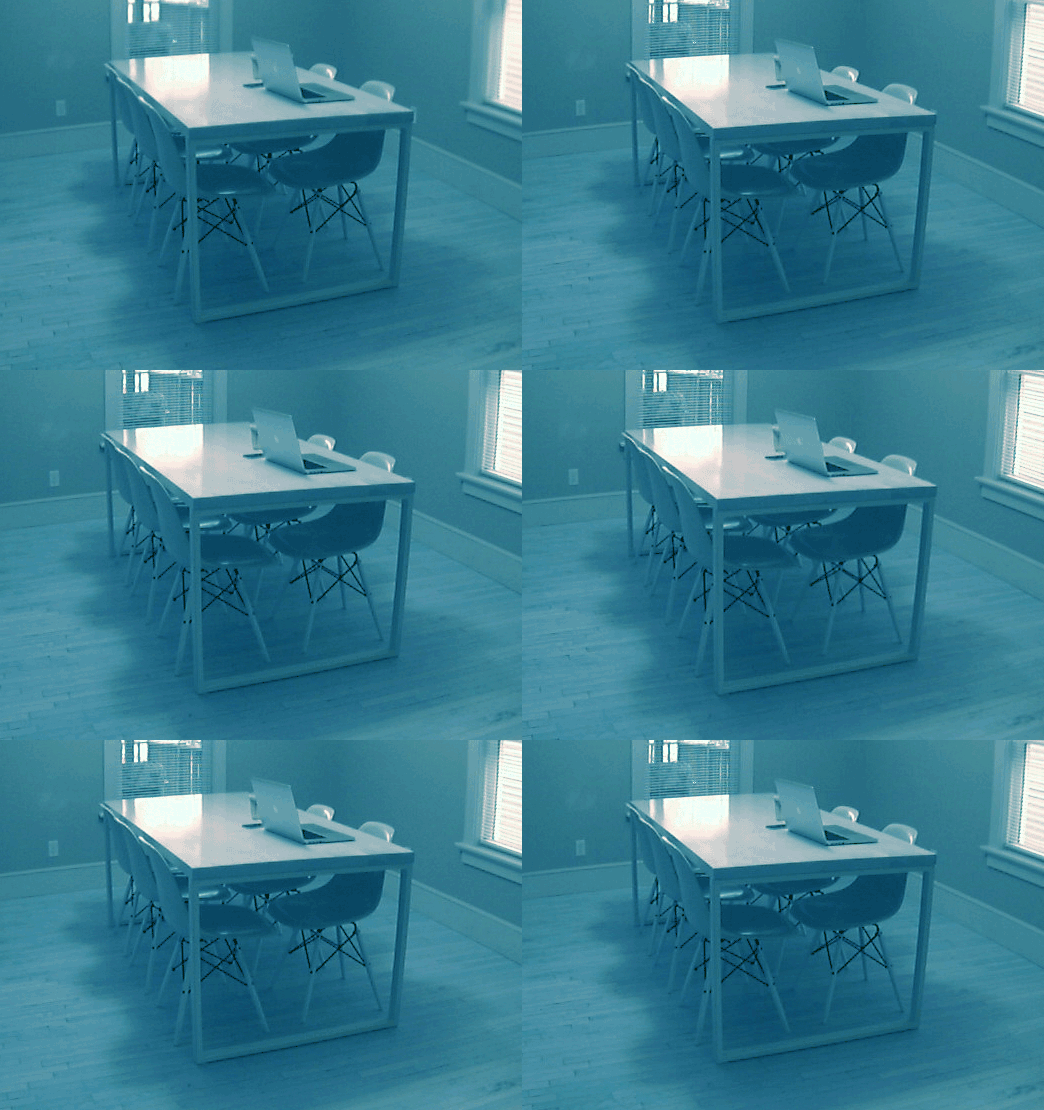
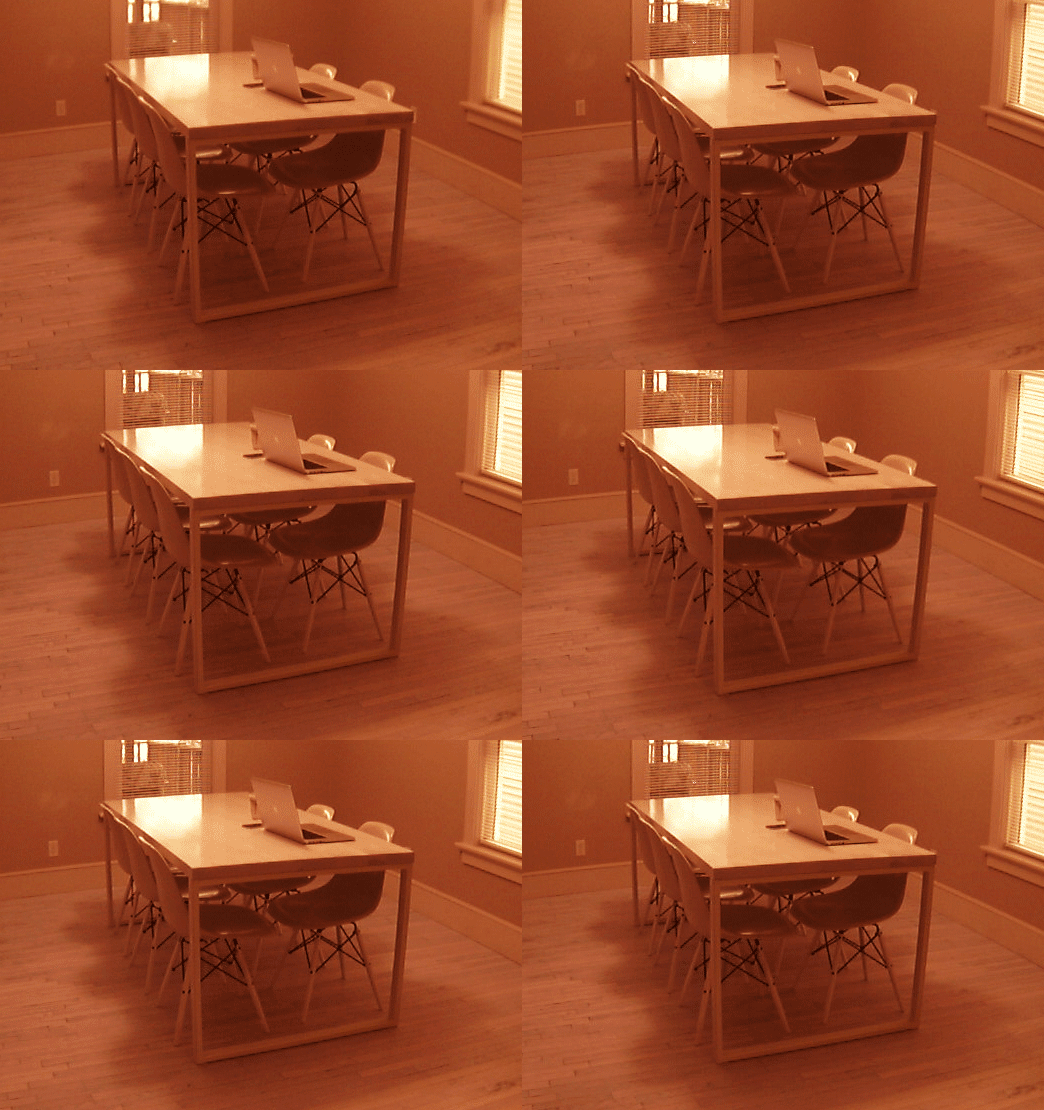
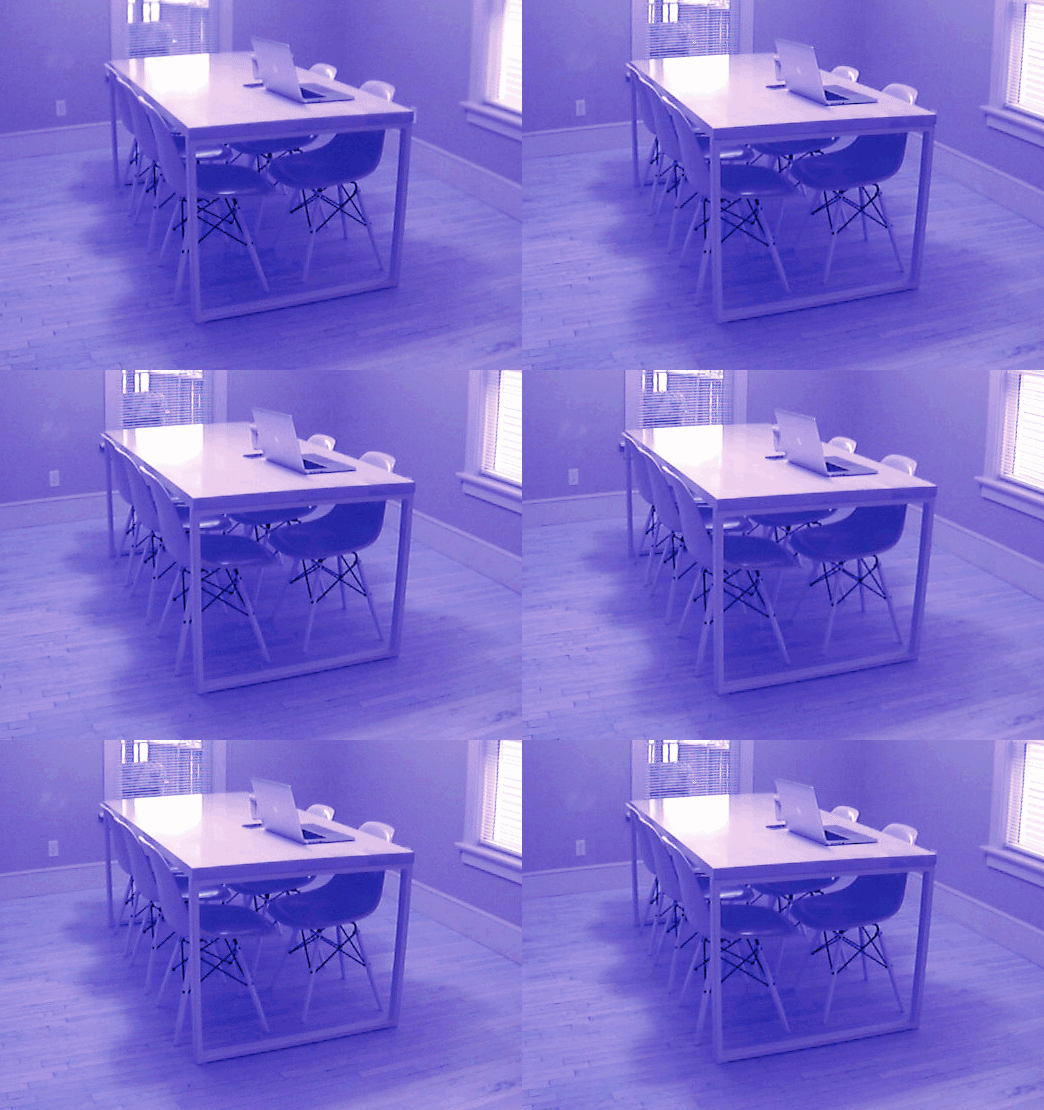
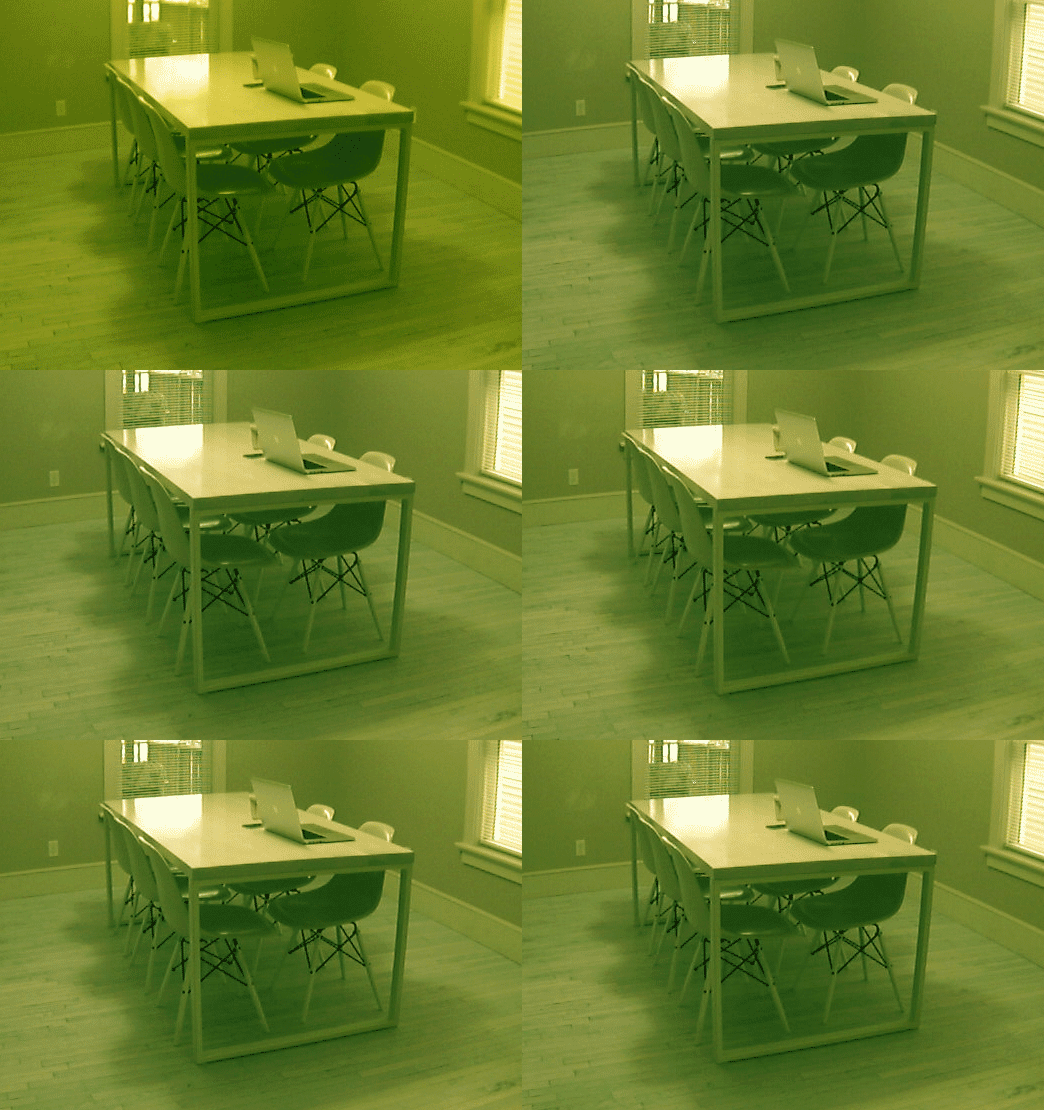
Multicolor view of the day’s workspace — four passes through the same moment.
Role. Engineer. Designer. Maker.